
Facial Muscle Conditioning as Youth Defense: A Structural Approach to Skin Longevity


Modern conversations about skin aging often focus on the epidermis: pigmentation, texture, hydration, and product performance. While surface care is essential, it represents only one dimension of facial aging. Beneath the skin lies a complex musculo-fascial system that directly influences contour, tissue support, circulation, and expression patterns.
A clinically informed youth-defense strategy must account for these deeper structures.
At Irvine Skin Care, facial muscle conditioning has long been integrated into treatment design because aging is not solely a skin event; it is a biomechanical process involving muscle tone, tension patterns, vascular flow, and structural balance.
The Structural Physiology of Facial Aging
The face is supported by a network of muscles that attach directly to the skin rather than bone. This unique anatomy means muscular behavior has an immediate effect on visible appearance.
Over time, several physiological changes occur:
Muscle imbalance — certain muscles become chronically overactive while others weaken
Reduced circulation — impairing oxygen and nutrient delivery
Altered lymphatic flow — contributing to fluid stagnation and tissue heaviness
Loss of dynamic support — affecting how skin drapes and moves
These shifts influence facial contour, elasticity, and expression. Skin that lacks adequate muscular support is more prone to laxity, dullness, and uneven tissue tension — factors commonly attributed to “aging skin” but rooted in deeper structural change.
Targeted facial muscle conditioning addresses these mechanisms directly.
Mechanisms of Facial Muscle Conditioning
When applied intentionally and consistently, muscular stimulation produces measurable functional benefits:
Neuromuscular activation- Encourages underused muscles to regain responsiveness and coordination.
Improved microcirculation- Enhances oxygenation and nutrient delivery, supporting tissue vitality.
Tension normalization- Reduces chronic contraction patterns that contribute to expression lines and asymmetry.
Lymphatic support- Facilitates fluid movement, reducing stagnation and promoting clearer tissue tone.
Structural reinforcement- Helps maintain facial contour by supporting the soft tissue framework beneath the skin.
Rather than treating aging as a superficial concern, this approach strengthens the systems that sustain skin performance.
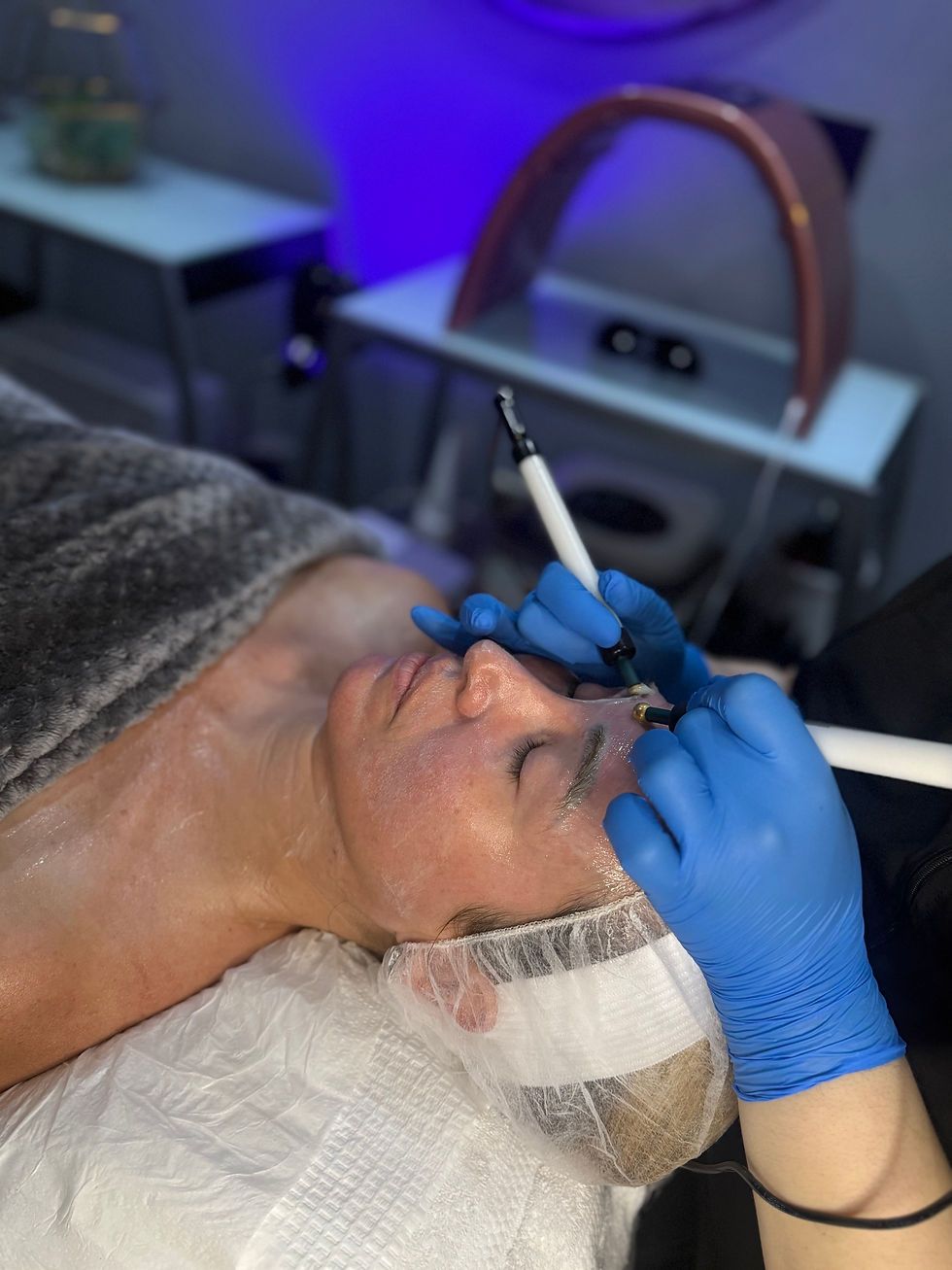
Irvine Skin Care’s Clinical Integration of Muscle Conditioning
Long before facial muscle training became widely discussed, Irvine Skin Care incorporated structural conditioning into professional treatments. This was not positioned as a trend, but as an extension of evidence-based skin physiology.
Our Face Sculpting treatment (commonly known to our clients as Cromo) best exemplifies this methodology.
Cromo is a structured facial muscle conditioning protocol designed to:
Activate key muscle groups responsible for lift and support
Release restrictive tension patterns
Stimulate vascular and lymphatic flow
Improve tissue responsiveness
Encourage balanced facial mechanics
Importantly, this is not a standardized massage routine. Each treatment is adapted to the client’s muscular presentation, recognizing that facial tension, expression habits, and tissue behavior vary significantly from person to person.
Other Irvine Skin Care treatments similarly integrate targeted stimulation techniques that reinforce muscular function as part of a comprehensive skin strategy.
Why Muscle Conditioning Matters in Youth Defense
Sustainable skin longevity depends on maintaining the functional systems that support it.
Clients who incorporate facial muscle conditioning into their routine often experience:
Enhanced tissue vitality and circulation
Improved facial tone and contour
Reduced appearance of tension-related lines
Healthier lymphatic movement
Greater overall skin responsiveness
This approach does not replace topical care or corrective treatments; it complements them by strengthening the anatomical foundation beneath the skin.
Youth defense becomes less about reactive correction and more about preserving function.
A Structural Philosophy, Not a Cosmetic Shortcut
At Irvine Skin Care, muscle conditioning is part of a broader clinical philosophy: skin health is inseparable from the systems that sustain it. By addressing the musculo-fascial layer, treatments work with the natural biomechanics of the face rather than attempting to compensate for structural decline.
The goal is not to freeze expression or create artificial change. It is to maintain balance, circulation, and tissue support so that the skin can perform optimally over time.
Client Action: Integrating Structural Care Into Your Routine
If you are focused on long-term skin vitality, consider muscle conditioning an essential component of your plan.

We recommend:
Scheduling a Face Sculpting (Cromo) session to evaluate your facial muscle patterns. The first 4 treatments should optimally be done 10-12 days apart to obtain the best results and serve as a starting point for your youth defense journey.
Incorporating targeted conditioning treatments consistently, not sporadically.
Consulting with your Irvine Skin Care specialist to build a plan that integrates surface skin care with structural support.
Youth defense is most effective when it addresses the face as a dynamic system: skin, muscle, circulation, and tissue working together.
If you are ready to experience a more comprehensive approach to skin longevity, our team is here to guide you.
Schedule your consultation and discover how structural facial conditioning can elevate your results.


Insightful article explaining how facial muscle conditioning may support healthier, firmer skin and long-term youthful appearance naturally. FCLD Spa Skin care clinic FL provides advanced skincare treatments focused on rejuvenation, hydration, relaxation, and maintaining naturally healthy radiant skin.